
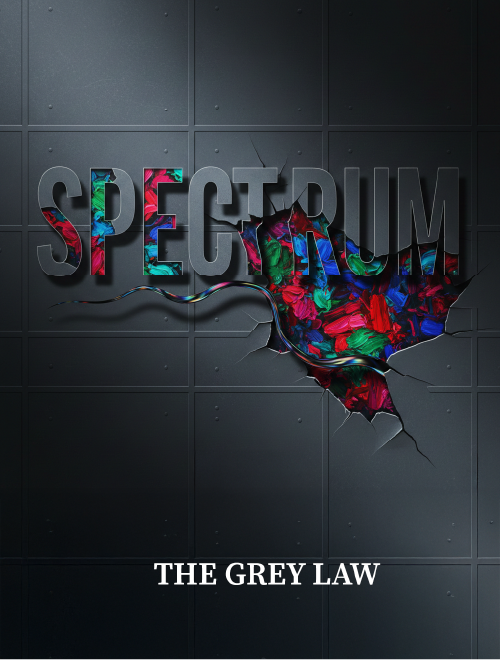
What is Spectrum?
In the isolated valley of Wetledale, conformity is absolute. Under the strict regime of Attitudinal Science, colour is contraband, and life is governed by a monochrome bureaucracy. A veteran Transporter, his livelihood stifled by these rules, smuggles a disgraced Examiner across the mountains to expose the leadership's hypocrisy. But they are not alone. Helen, a young decorator with a dangerous affinity for the forbidden hues, unearths secrets that the Council has striven to conceal.
When their attempt to use the rules to free the valley is crushed by ruthless political maneuvering, the Transporter and Helen are forced into a desperate alliance. No longer fighting for the truth, they embark on a final mission: to smuggle a cloth of vibrant, revolutionary colour to a neighbouring land, hoping to ignite a change abroad that Wetledale is too afraid to embrace at home.
92,000
Adult
Themes Explored in Spectrum
- Truth, Perception, and Deception
- Authority, Control, and Power Dynamics
- Individual Agency vs. Systemic Constraints
- Journey and Escape
Synopsis
Beyond the Last Mountains, in the isolated valley of Wetledale, reality is governed by Attitudinal Science - a rigid monochromatic doctrine enforced by the powerful Cabinet Makers' Fraternity. Here, vibrancy is considered a psychological contagion, and the valley has been systematically bled of hue to ensure industrial conformance. The Transporter, a veteran of the mountain passes whose livelihood has been stifled by this 'Grey Law,' enters a dangerous conspiracy to smuggle a disgraced but brilliant Examiner, Jim Kirwin, into the valley to expose the rot within the system.
The mission is jeopardised by the Peacekeeper, a ruthless political operative who views Wetledale not as a home, but as a resource to be managed. She is determined to halt the trade of 'Fishwick colour' - a revolutionary pigment from the northern snows - before it can reach the warring Lords of the Flatlands. Amidst this high-stakes realpolitik, the Transporter finds an unlikely ally in Helen, a young 'Colourer' whose forbidden, visceral affinity for the spectrum makes her a living threat to the state.
Guided by the Transporter, Helen's journey is one of structural revelation. As the narrative unfolds in 'transparent layers,' Helen unearths a magnificent mural hidden behind the panelling of the Conformance Hall, proving that Wetledale's monochrome history is a manufactured lie. Supported by her pragmatic cousin Angela and the enigmatic forager Michael Fishwick, Helen secures secret records detailing the illegal use of colour by the very leaders who forbid it.
This discovery triggers a violent purge, leading to a desperate flight across treacherous marshes and a final confrontation at the Armdale warehouse. In a crushing act of systemic self-preservation, the Peacekeeper quashes the Examiner's findings, forcing a broken Kirwin to sign a sanitised report that preserves the status quo in exchange for his survival.
Facing the total 're-greying' of her world, Helen makes a final plea to the Transporter. Moved by her conviction and his own rediscovered belief in the necessity of risk, the Transporter makes a fateful choice. He agrees to help Helen smuggle a cloth of shimmering Fishwick colour - a material of defiance that refracts the entire visible spectrum - over the border, choosing to ignite a revolution abroad rather than submit to the stifling control of home.
Portrait of Spectrum
Excerpt: The Transporter in Wetledale
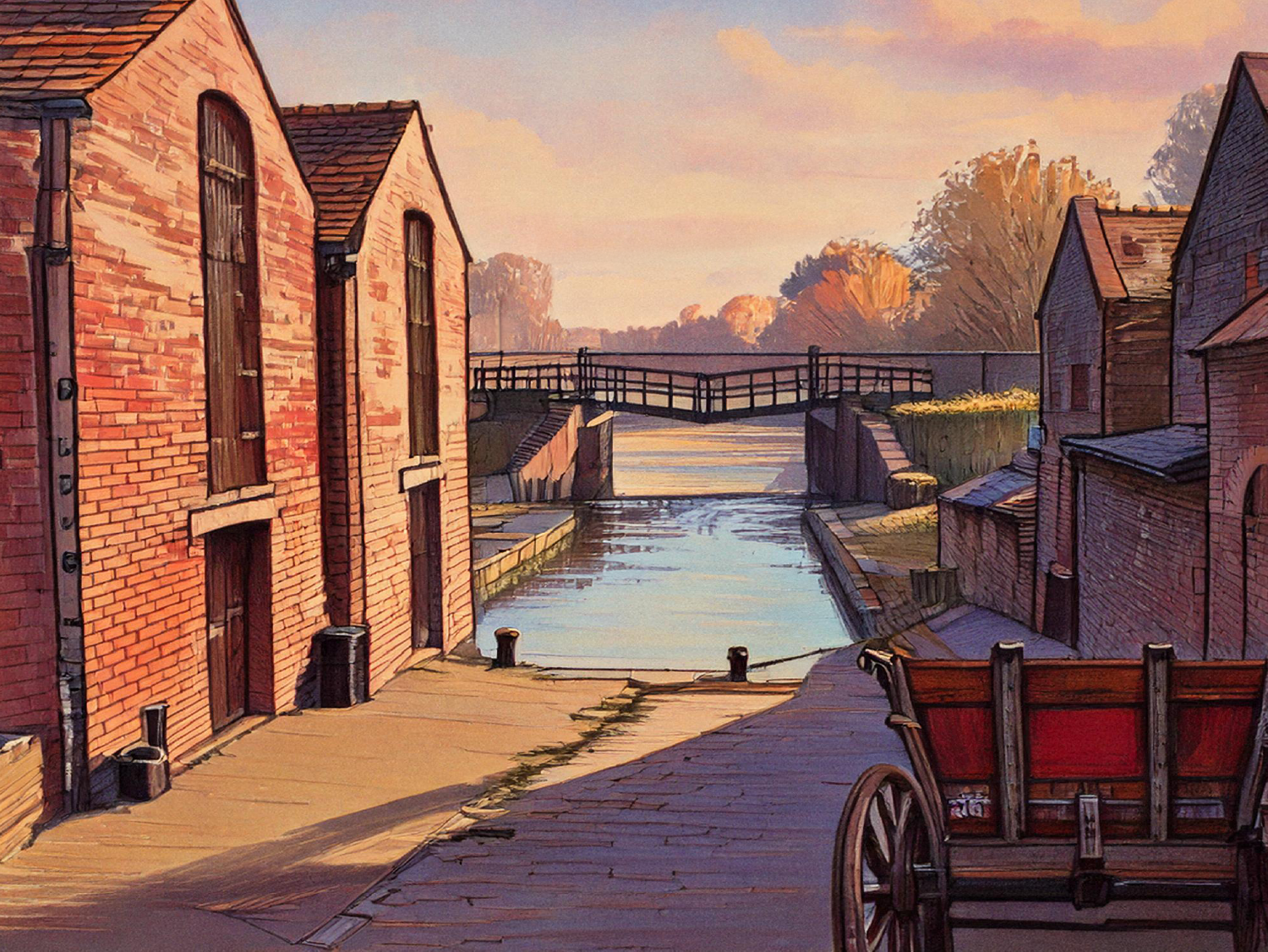
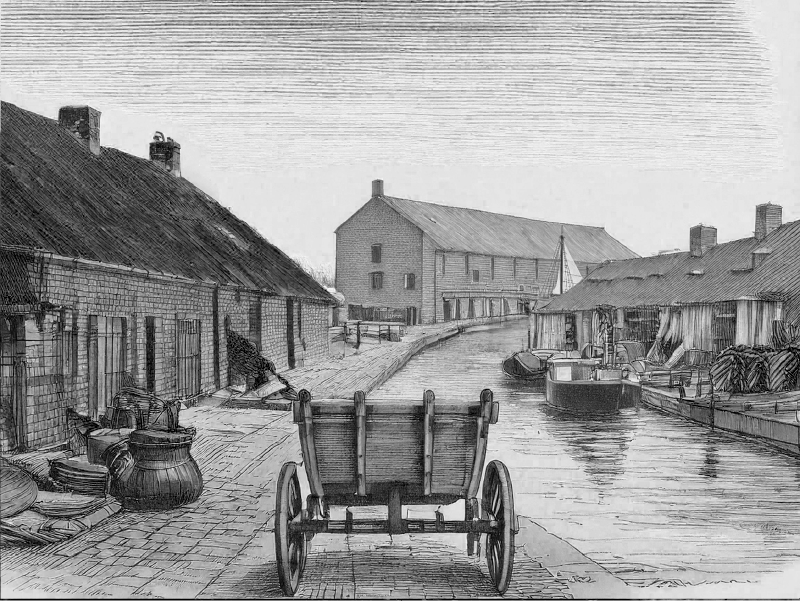
The Transporter urged his cart along the rough track, searching for the Fishwick cottage. It had taken him over an hour to even find the edge of the quarry, and two days was the most he had if the Warehouse Manager's letter was to be believed. 'We have to get the Examiner into Wetledale before winter closes the Last Mountain pass,' wrote the Warehouse Manager. 'If colour does not return to Wetledale, the consequences will be severe. No colour. No future. My most capable transporter knows that better than most.'
The track suddenly disappeared into slate rubble. Ahead of him, the Transporter could see a cottage, its front disguised with slate and wood from the surrounding hills. The relief was intense. His sweep of High Wetledale at first light from the head of the valley had at last found the right path. Fishwicks, he knew, were very hard to find; that was why he needed them.
He climbed quickly down from the cart. He had been searching for the cottage for over an hour - an hour that was gone. He crossed to the thick wooden door and knocked. His knock was slow, deliberate, the way a Transporter knocks when he wants to feel in control. He knew he wasn't.
The door remained shut.
Questions and Answers
-
How does the narrative structure of Spectrum mirror the artistic process?
Much like a water colour painting, the story is applied in 'transparent layers.' It is a non-linear journey that shifts between the high-stakes present and the historical betrayals of the Southern City. By layering the perspectives of the weary Transporter, the idealistic Helen, and the pragmatic Examiner, the reader experiences a slow-burn revelation where the 'truth' of Wetledale only becomes clear once every wash of narrative has been applied.
-
What makes the 'Colour Trinity' a unique allegorical tool in dystopian fiction?
Beyond mere aesthetics, colour is the novel's magic system and its political weapon. The conflict between Additive light (the Sky Lord's hope) and Subtractive pigment (the Council's control) serves as a sophisticated allegory for political theory. It pits the 'light' of individual potential against the 'gravity' of institutional control, where the regime believes that any deviation from the established 'brown' of conformity leads to societal collapse.
-
How does Spectrum subvert the traditional 'chosen one' trope?
Revolution in Wetledale does not come from a warrior, but from a 'Colourer' - a young decorator named Helen whose rebellion is her ability to perceive. The story explores the intersection of her youthful radicalism with the 'Transporter's' veteran pragmatism. It is a dual-protagonist arc where change is sparked not by a sword, but by the retrieval of a hidden record and the courage to see past a state-mandated monochrome.
-
How is 'colour' used as theme and metaphor through the narrative?
The novel contrasts two philosophies of colour, representing two opposing political/philosophical structures.
-
1. Additive Colour (Red, Green, Blue): The Sky Lord's claim that these 'purest colours' combine to form white light. This represents the possibility of a new, optimistic, and unbound future.
-
2. Subtractive Colour (Cyan, Magenta, Yellow): The traditional Flatlands model, which combines to create black or the earth-tone brown of the Cabinet Makers. This represents the older, controlling order where everything must ultimately be blended into the established, non-divisive structure.
Colour is used throughout the novel not only as a physical element (pigments, dyes) but extensively as a central theme and analogy for concepts of power, emotion, morality, social structure, and reality itself.
Spectrum - by Anthony Riding
Anthony Riding is a novelist whose work explores the intersection of systemic control and individual expression. With advanced degrees in both Science and Business Management - including a specialised focus on the psychology of Creativity - Anthony spent a career in international marketing and innovation across Europe and Southern China.
This background in the culture of organisations and the nature of global trade provides the foundational realism for the world of Spectrum. Having spent decades navigating the high-stakes communication of international boardrooms, Anthony brings a unique perspective to the 'realpolitik' of his speculative worlds.
Spectrum is the culmination of his fascination with how systems of power attempt to 'conform' the human spirit, and the vibrant resilience required to resist them.
-